From Species Distribution Models to Spatial Predictions of Nature’s Contributions to People
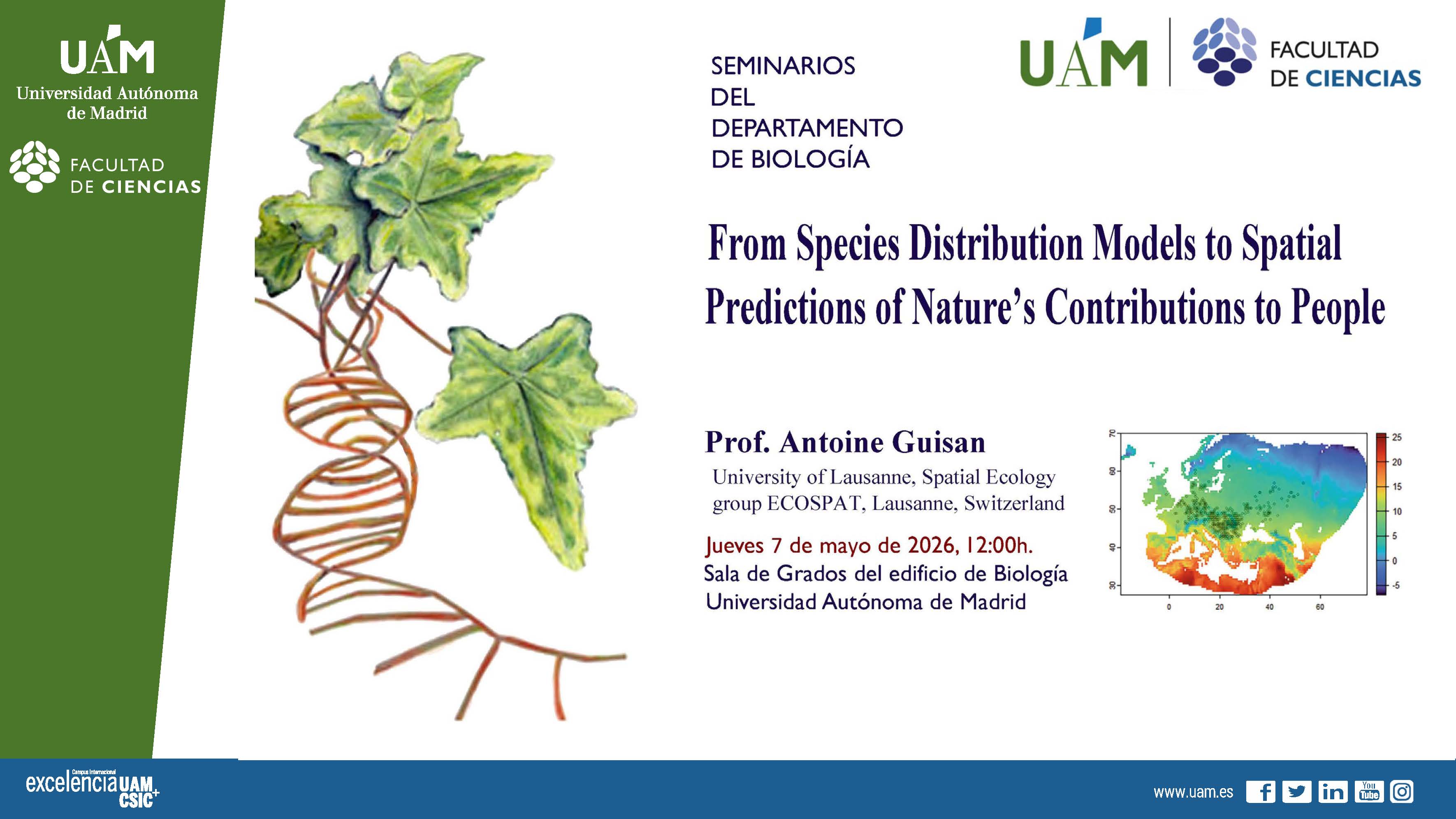
From Species Distribution Models to Spatial Predictions of Nature’s Contributions to People
The degradation of climate and biodiversity are two major crises that humans are facing and for which rapid action is needed. Both crises are partially linked and susceptible to threaten nature’s contribution to peoples (NCPs) and thus human well-being. Hence, it is essential to find efficient strategies for protecting key areas for both biodiversity and NCPs for a sustainable future. Studies at various scales have already used species distributions and NCP maps to identify the most optimal areas for safeguarding both components. Yet most NCP maps still rely on land-cover indicators that overlook how biodiversity supports these contributions. We propose that species-level data, widely used in biodiversity mapping, can better inform direct NCP prediction through the development of Species’ Contributions to People (SCP). Linking species to NCP through relational SCP databases and combining these with species distribution models and global change scenarios can yield spatial NCP predictions that can better rooted in species’ ecological characteristics. This approach fosters integrated biodiversity–NCP planning and supports conservation goals. Yet, an evaluation of how changes in species distributions could affect NCPs was still lacking. Here, based on a recently established table of relationships between more than 2,000 native vertebrate and tracheophyte species and 17 NCPs, we propose and illustrate a novel approach to predict the spatial distribution of NCPs from individual species predictions for the current period and four future time-scenarios in the Western Swiss Alps. Predictions of the different NCPs and their categories show varying degrees of spatial correlation, with some NCPs revealing very distinct patterns across time-scenarios. Our study highlights the potential to predict NCPs directly from species predictions in biodiversity assessments, allowing a better understanding and a better anticipation of the way species contribute to NCP and human well-being. The species-based NCP prediction approach we propose constitutes a major new asset to improve spatial conservation planning, but the development of such species-NCP tables should continue, and larger databases be compiled. We outline key methodological steps, identify research needs, and encourage collective progress to advance species-NCP knowledge for a transformative shift in how we assess and manage biodiversity and NCP.
Biography
Antoine Guisan is professor in plant ecology and leading the spatial ecology group ECOSPAT at the University of Lausanne, Switzerland (http://www.unil.ch/ecospat). His main focus is on spatial predictive modelling of plant and animal distributions. Besides the methodological interest in developing models and approaches, his group applies models to answer various questions, such as understanding what drives species’ ranges, assessing the potential impact of climate change on species and communities, and invading species forecasting and prioritizing biodiversity conservation, with a particular and long-standing emphasis on mountain biota.
Información del evento
Sala de Grados del EDIFICIO DE BIOLOGIA
Fechas
07/05/2026, 12:00H
Fecha de inicio
07/05/2026, 14:00H
Fecha fin